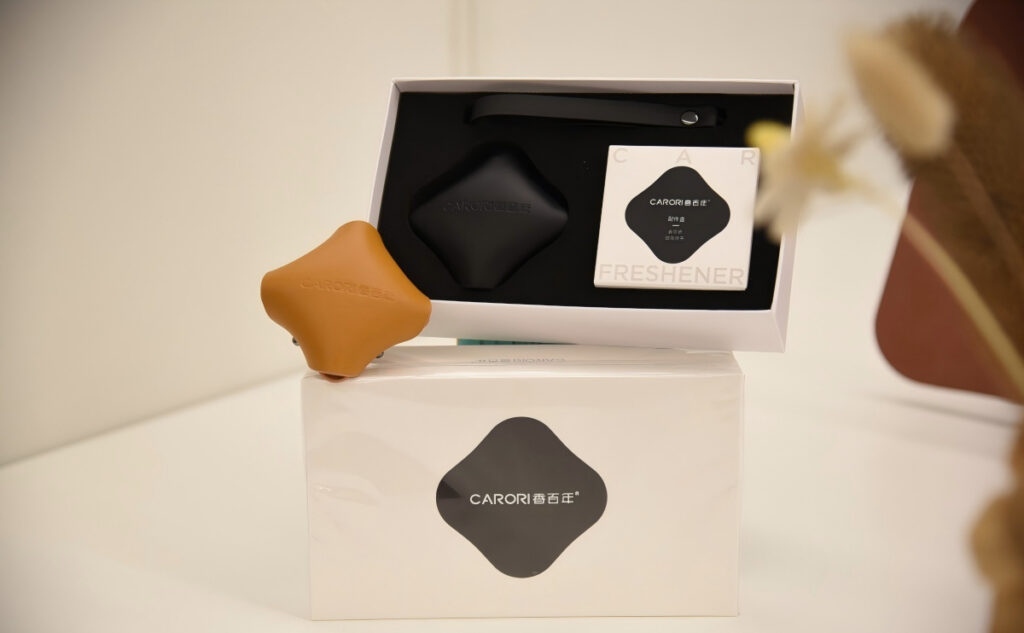



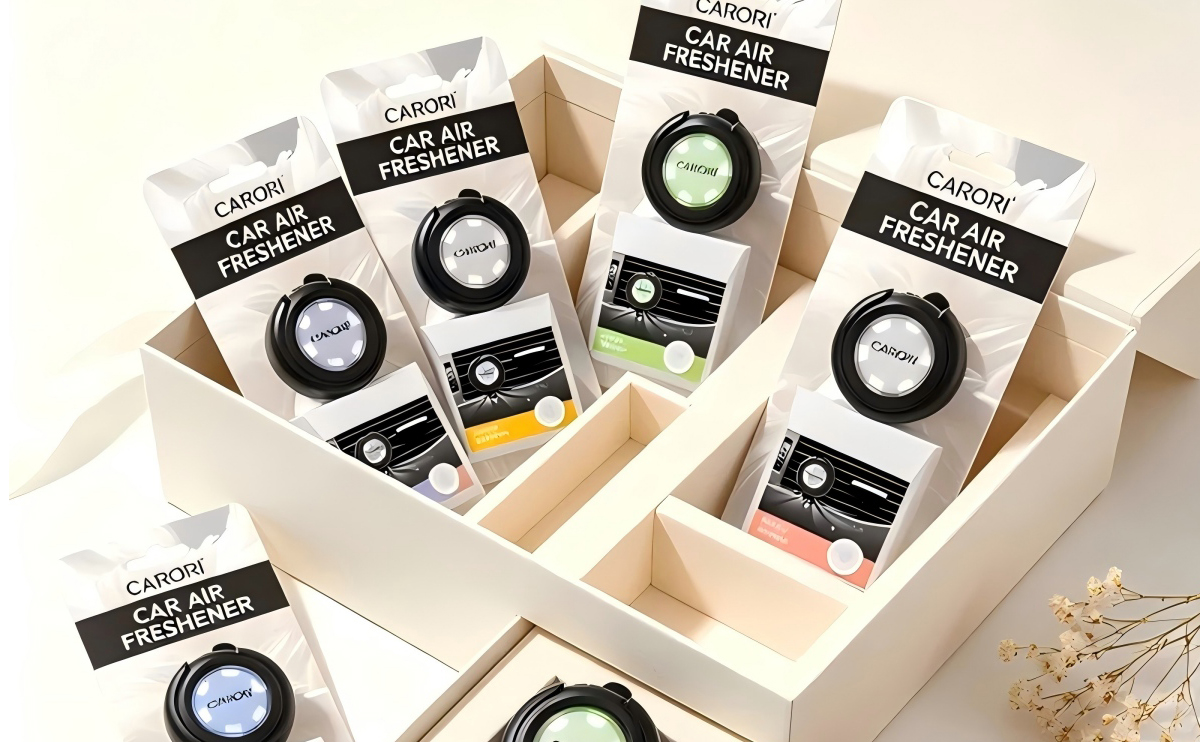
A car air freshener may contain a well-developed fragrance formula, but that alone does not guarantee a satisfying in-car experience. Some products release too much fragrance shortly after installation, while others produce only a faint scent that becomes difficult to notice after a few days. In many cases, the difference comes down to product design.
The structure of a car air freshener determines how fragrance is released into the surrounding air. Its materials, exposed surface area, ventilation openings, and installation position all influence the rate at which fragrance evaporates and travels through the vehicle cabin. These factors also affect how consistently the scent can be perceived during everyday driving.
For automotive fragrance brands, retailers, and distributors, understanding the relationship between car air freshener design and fragrance distribution is essential when evaluating product performance. CARORI considers fragrance selection and product design as important parts of developing an automotive fragrance experience that suits different preferences and usage scenarios.
1. Why Does Car Air Freshener Design Matter?
Fragrance distribution is not simply a question of how strong a fragrance smells. It also involves how quickly the scent becomes noticeable, how evenly it spreads, and how its intensity changes over time.
A fragrance that smells pleasant when tested directly from the package may perform differently inside a vehicle. Cabin temperature fluctuates, air conditioning changes airflow patterns, and the distance between the product and the driver affects how the scent is perceived.
The design of a car air freshener influences several aspects of performance:
- Initial fragrance release: How quickly the scent becomes noticeable after installation.
- Scent coverage: How effectively fragrance reaches different areas of the cabin.
- Release consistency: Whether the fragrance remains reasonably balanced rather than becoming overpowering or barely detectable.
- Product longevity: How efficiently the fragrance is released throughout the intended service life.
- User experience: Whether the product fits conveniently into the vehicle without obstructing controls or interfering with normal driving.
These factors are closely connected. A design that allows fragrance to evaporate quickly may provide a strong initial impression, but it can also shorten product life. Conversely, a design that restricts fragrance release too much may struggle to provide a noticeable scent.
The objective is to achieve a suitable balance between fragrance intensity, distribution, and longevity.
2. How Do Different Car Air Freshener Designs Affect Fragrance Distribution?
Different product structures manage fragrance release in different ways. The best option depends on the fragrance medium, the vehicle’s ventilation system, the intended placement, and the expectations of the target market.
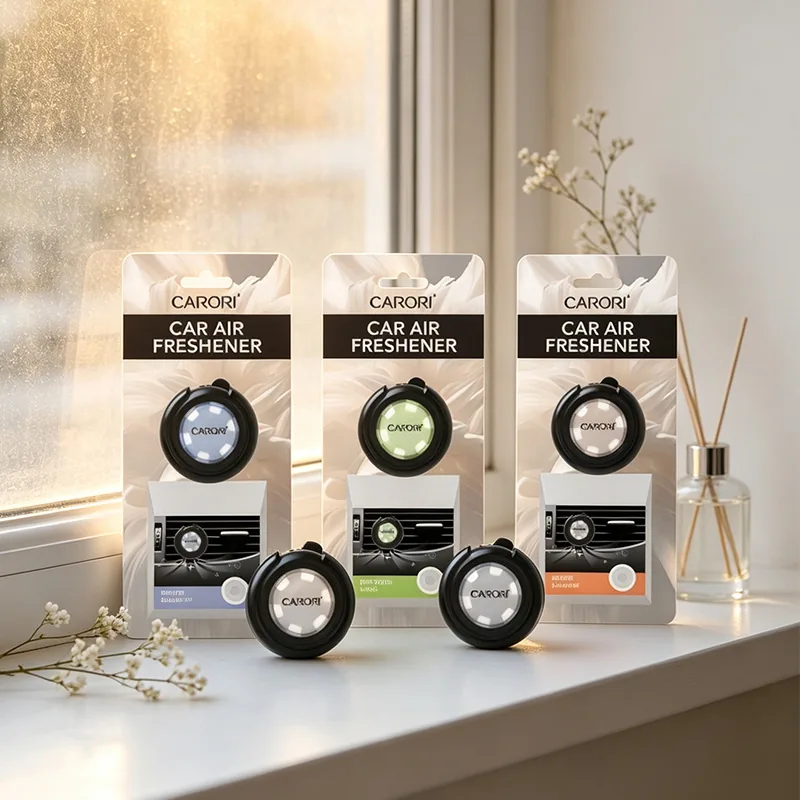
Car Vent Air Fresheners
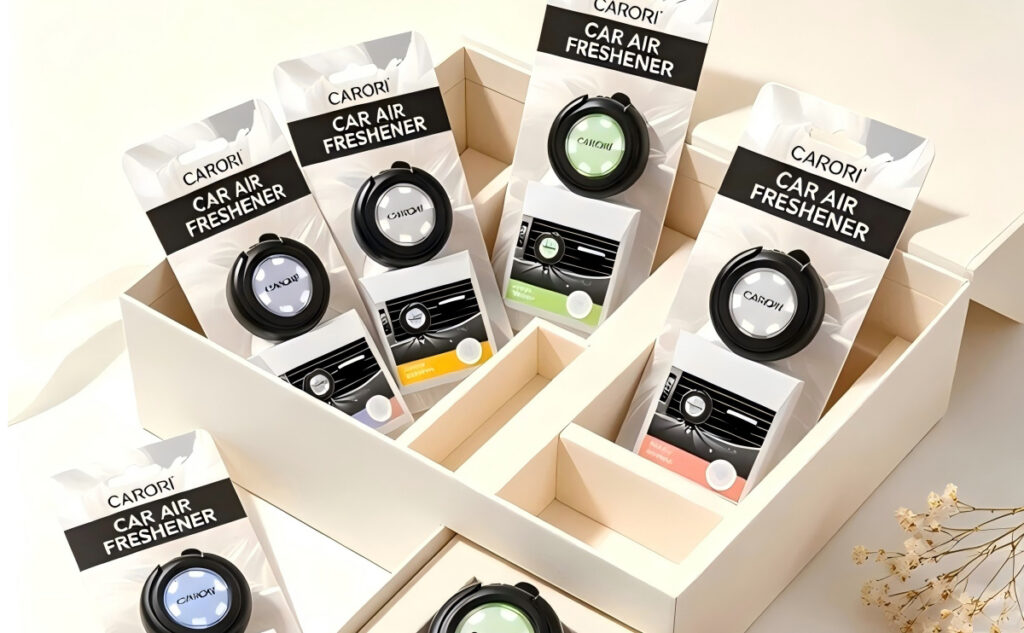
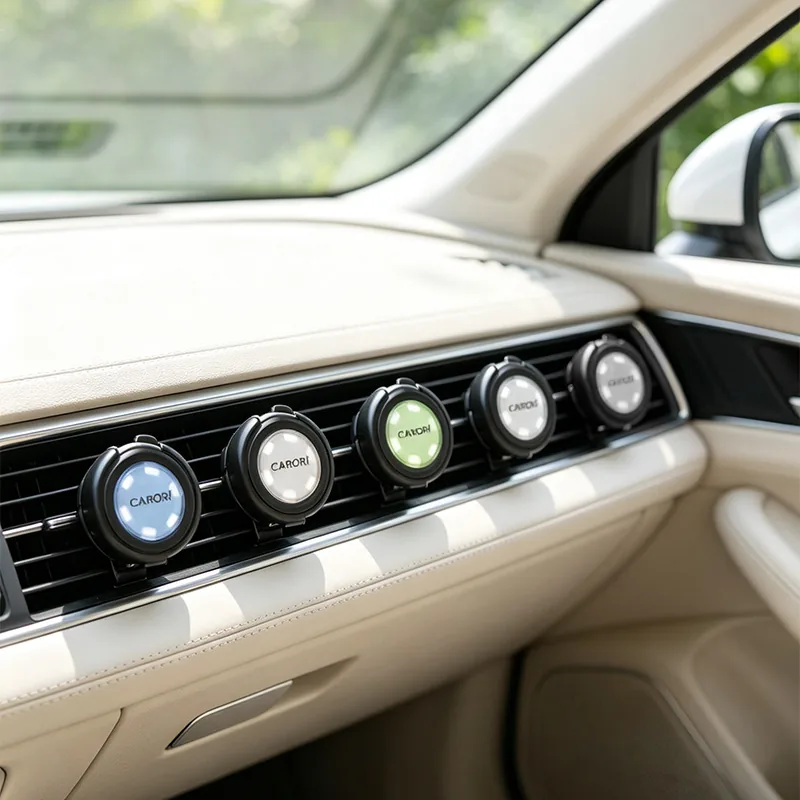
A car vent air freshener uses airflow from the vehicle’s ventilation system to help distribute fragrance. Depending on the design, the product may contain a fragrance-infused material, a replaceable fragrance insert, or another controlled-release medium.
When the air conditioning or heating system is operating, air passing through the vent can carry fragrance into the cabin. This makes vent-mounted products particularly suitable for drivers who want fragrance to spread with the vehicle’s existing airflow.
However, the strength of fragrance distribution depends on more than the vent attachment itself.
Important design considerations include:
- The position of the fragrance material relative to the airflow.
- The size and arrangement of openings that expose the fragrance medium.
- The resistance created by the product structure.
- The stability of the attachment under vibration and temperature changes.
- The ability to adjust fragrance intensity, where applicable.
A vent air freshener positioned directly in a strong airflow may release fragrance more quickly than one exposed to weaker airflow. If the product has no means of adjusting its release rate, this difference can become more noticeable under changing operating conditions. For manufacturers, the challenge is to make effective use of airflow without causing excessive fragrance consumption or an overly concentrated scent near the outlet.
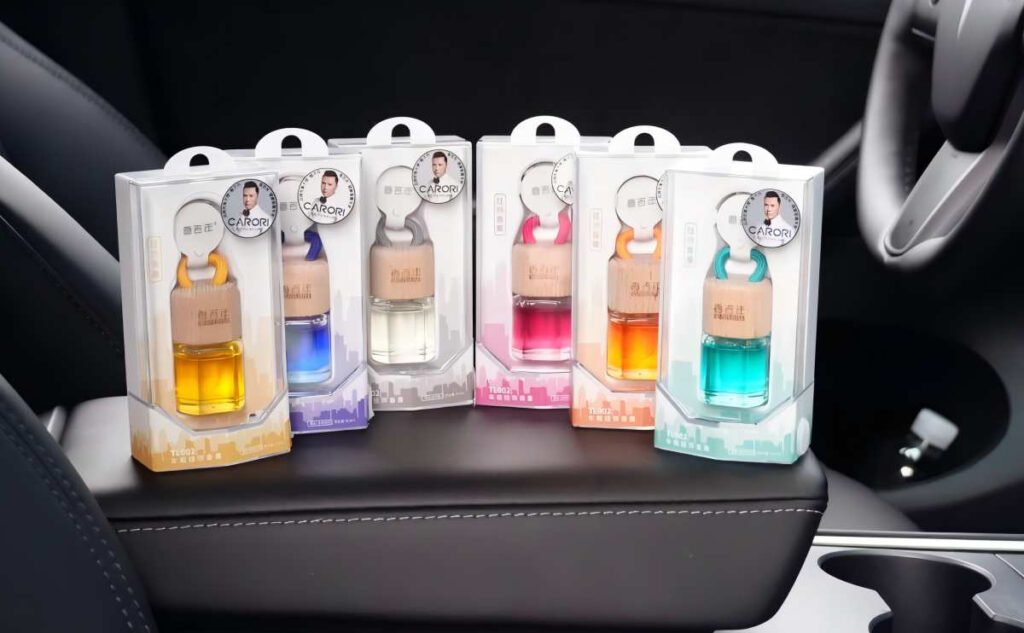
Hanging Car Air Fresheners
A hanging car air freshener is often suspended from the rearview mirror or placed in another suitable location, depending on local regulations and vehicle requirements.
Its fragrance distribution generally depends on passive evaporation, the exposed fragrance surface, and natural air movement inside the cabin. Unlike vent-mounted products, hanging designs are not necessarily positioned directly in a concentrated stream of conditioned air.
The shape and material of the product therefore become especially important.
For example, a larger exposed fragrance surface may increase the opportunity for evaporation, while a less permeable material or more enclosed structure may slow the release process. The actual result also depends on the fragrance formulation and the properties of the selected material.
Hanging products offer flexibility in appearance, shape, and packaging. They can be developed in different styles to suit a brand’s positioning, from understated designs for everyday use to distinctive shapes intended to support brand recognition. Their placement must nevertheless be considered carefully. Products should not obstruct the driver’s view, and the mounting method should be suitable for the intended application.
Gel and Container-Style Car Air Fresheners
Gel and container-style products use a housing or reservoir to hold fragrance material. Their design determines how much of that material is exposed to the surrounding air.
A container with adjustable openings may allow users to change the exposed area, influencing fragrance release. A more enclosed structure can help limit direct exposure, although the final performance still depends on the formulation and the permeability of the materials used.
These products are useful examples of how the housing itself can become part of the fragrance control system.
Manufacturers need to consider more than the external appearance. The container should retain the fragrance material securely, remain compatible with the formulation, and perform reliably during normal vehicle use.
| Design type | Main distribution mechanism | Key design consideration |
|---|---|---|
| Car vent air freshener | Ventilation airflow assists fragrance dispersion | Airflow exposure and release control |
| Hanging car air freshener | Passive evaporation with natural cabin airflow | Exposed surface area and material properties |
| Gel or container-style air freshener | Evaporation from an exposed fragrance medium | Opening size, containment, and evaporation rate |
No single design is automatically superior. The appropriate choice depends on how the product is expected to perform and how drivers intend to use it.
3. Which Design Factors Have the Greatest Impact on Fragrance Distribution?
Several engineering and formulation variables work together to determine how fragrance moves from the product into the cabin.
Exposed Surface Area and Product Structure
The amount of fragrance material exposed to the surrounding air can influence the evaporation rate. A larger exposed area may allow fragrance to escape more readily, while a restricted opening may reduce exposure.
However, surface area should not be evaluated in isolation. A product with a large fragrance surface may still release scent slowly if its material retains fragrance effectively. Similarly, a compact product can deliver a noticeable scent when its formulation and release mechanism are designed for that purpose.
For a car air freshener manufacturer, the goal is to establish an appropriate relationship between product dimensions, exposed area, and fragrance loading.
Material Selection and Fragrance Compatibility
The fragrance medium affects both scent release and product reliability.
Different materials absorb, retain, or release fragrance in different ways. A porous substrate, polymer component, gel, or absorbent insert may interact differently with the same fragrance formulation. Certain ingredients can also affect material properties over time.
Material selection should therefore consider:
- Fragrance absorption and retention.
- Release behavior under expected operating temperatures.
- Compatibility between the fragrance formulation and product components.
- Resistance to leakage, deformation, or deterioration.
- Consistency between production batches.
Compatibility testing is particularly important when changing fragrance formulations or introducing a new material. A housing that performs well with one formulation should not automatically be assumed to perform identically with another.
Airflow and Installation Position
Airflow influences how quickly fragrance disperses after leaving the product. In a vehicle, air movement can vary considerably depending on fan speed, vent direction, window position, and whether the ventilation system is operating.
A vent-mounted product may distribute fragrance more actively when the fan is running. A passive product may rely more heavily on natural convection and movement caused by passengers entering, exiting, or driving the vehicle.
Installation position also changes the distance between the fragrance source and the people in the cabin. A strong scent near the driver’s seat does not necessarily mean that fragrance is distributed evenly throughout the vehicle.
When developing a product, manufacturers should test it in representative cabin conditions rather than relying exclusively on laboratory observations or direct smelling tests.
Fragrance Formulation and Release Rate
Product design and fragrance formulation cannot be evaluated separately.
A fragrance contains multiple volatile compounds, and these compounds may evaporate at different rates. As a result, the perceived scent can change as the product ages. Temperature and airflow can further affect the rate of release.
A formulation designed for a strong initial impression may behave differently from one intended to deliver a more gradual fragrance experience. The housing and release mechanism should be developed with these characteristics in mind.
For brands seeking consistent product performance, the relevant question is not simply whether a fragrance is strong. It is whether the fragrance release rate remains appropriate throughout the product’s intended service life.
4. How Can Manufacturers Evaluate Car Fragrance Diffusion Performance?
Visual inspection and an initial fragrance test are useful, but they cannot provide a complete picture of product performance.
A more reliable evaluation combines material testing, controlled fragrance measurements, and practical vehicle testing. The exact procedure should reflect the product’s intended use and the performance claims a brand plans to make.
Key Performance Tests
| Test area | What it evaluates | Why it matters |
|---|---|---|
| Initial fragrance release | How quickly the scent becomes noticeable | Helps assess the first-use experience |
| Release consistency | How fragrance output changes over time | Identifies rapid depletion or weak ongoing release |
| Temperature performance | Changes in release behavior under different temperatures | Helps assess performance in varying cabin conditions |
| Material compatibility | Interactions between fragrance and product components | Reduces the risk of deterioration or leakage |
| Stability and containment | Whether the product remains intact during intended use | Supports product reliability |
| Vehicle-use evaluation | Fragrance perception under realistic cabin conditions | Connects laboratory results with actual use |
Where quantitative comparison is required, manufacturers can measure product mass loss over defined periods under controlled conditions. Mass loss can provide an indication of volatile release, although it does not directly measure perceived fragrance intensity or prove that the scent is evenly distributed.
Sensory evaluation can complement these measurements by assessing fragrance intensity and character at different stages of product life. Using consistent test conditions and documented evaluation criteria makes comparisons between prototypes more meaningful.
For CARORI and other automotive fragrance brands, this type of assessment can help identify whether a design change improves the user experience or simply changes the speed of fragrance consumption.
5. How Should Fragrance Selection Work With Car Air Freshener Design?
A successful automotive fragrance product combines a suitable scent profile with a release mechanism that supports the intended experience.
The same fragrance may be perceived differently when used in a vent-mounted product and a passive hanging product. Differences in airflow, temperature exposure, material interaction, and release rate can affect how the fragrance develops inside the cabin.
This is why fragrance selection should take place alongside product development rather than being treated as a final decorative choice.
Exploring CARORI’s Fragrance Range
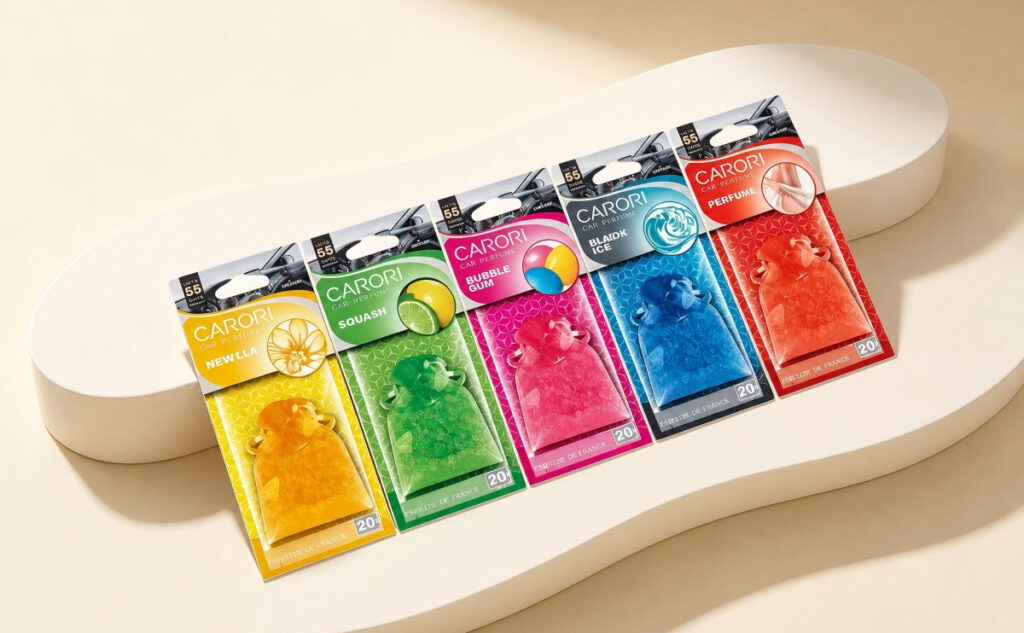
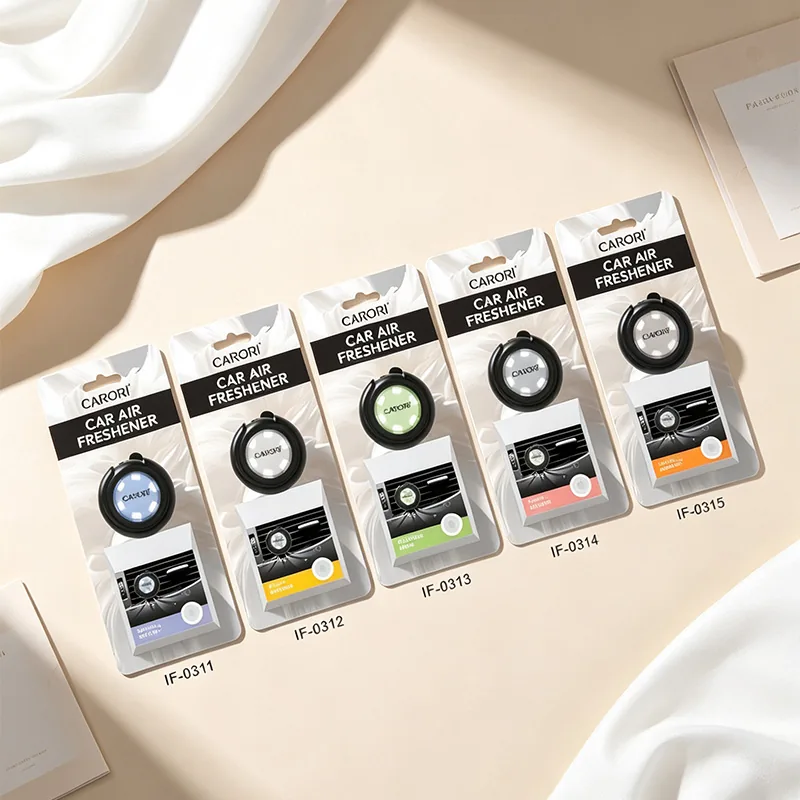
CARORI offers fragrance options that allow brands and customers to consider different preferences when selecting an automotive fragrance product.
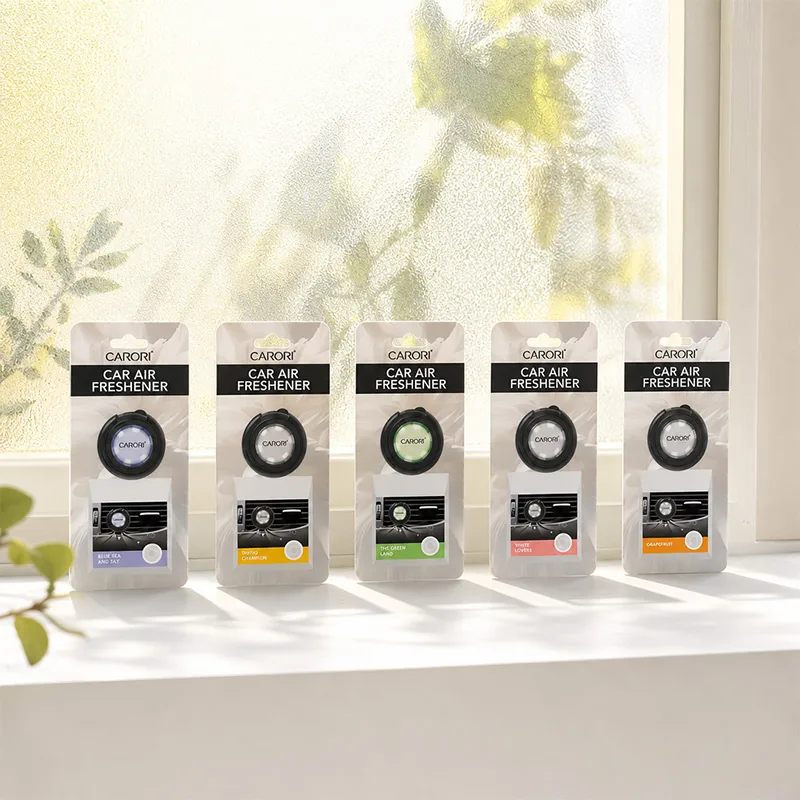
- Blue Sea and Sky — An option for customers drawn to a fragrance identity associated with the sea and open skies.
- Diving Champion — A distinct fragrance name within the CARORI range, suitable for customers exploring different scent identities.
- The Green Land — An option for customers interested in a fragrance identity inspired by the natural environment.
- White Lovers — A separate choice for customers seeking a different fragrance character from the collection.
- Grapefruit — A citrus-named fragrance option for customers who prefer to explore citrus-oriented scent profiles.
The names provide a starting point for product selection, but the final fragrance experience should be evaluated using the actual formulation and finished product. Fragrance names alone do not establish how strong a scent will be, how far it will spread, or how long it will last.
For automotive fragrance brands, testing each fragrance with the intended product structure can help determine whether the combination delivers the desired balance of scent intensity, consistency, and longevity.
6. What Should Buyers Consider When Sourcing Car Air Fresheners?
For importers, wholesalers, distributors, and private-label brands, selecting a supplier involves more than comparing product appearance or unit price.
A well-designed car air freshener must meet the requirements of its intended market while maintaining consistent performance across production batches. Buyers should evaluate the complete product system, including the fragrance, materials, packaging, and manufacturing process.
Before placing an order, consider the following points.
Product design: Is the structure appropriate for the target vehicle environment? Are the installation method, dimensions, and materials suitable for the intended use?
Fragrance performance: Can the supplier explain how fragrance release and product longevity are evaluated? Are performance expectations supported by appropriate testing?
Material compatibility: Have the fragrance formulation and product components been evaluated together? Are there documented procedures for identifying leakage, deformation, or other compatibility issues?
Quality control: Does the manufacturer have defined procedures for checking fragrance consistency, component quality, assembly, and finished-product performance?
Packaging and customization: Can the supplier support the required packaging format, product appearance, fragrance selection, and branding specifications?
Production and supply capability: Can the supplier maintain consistent specifications and provide the documentation needed for the buyer’s market and distribution requirements?
These questions help distinguish a product that looks attractive in a sample from one that can meet commercial requirements over repeated production runs.
For businesses developing a private label car air freshener, it is particularly important to confirm that the approved sample, fragrance formulation, materials, and mass-production specifications remain aligned.
7. How Can Better Design Create More Value for Car Fragrance Brands?
Product design affects both the fragrance experience and the commercial value of an automotive fragrance product.
A well-developed structure can make fragrance release more predictable, improve ease of use, and support a recognizable product identity. It can also help brands differentiate products through installation methods, housing designs, replaceable fragrance components, or packaging options.
These advantages matter in a competitive market where fragrance quality, appearance, convenience, and product reliability all influence purchasing decisions.
However, better design does not necessarily mean adding more components or creating a more complicated structure. A simpler design may be more appropriate when it provides the required fragrance performance, is easy to use, and can be manufactured consistently.
The most effective approach is to establish clear performance objectives first, then evaluate how product geometry, materials, fragrance formulation, and airflow work together to achieve them.
For manufacturers and buyers, this creates a more practical basis for product development than relying on fragrance strength or appearance alone.
Conclusion:
The design of a car air freshener plays a central role in fragrance distribution. Product structure determines how fragrance material is exposed to the air, material selection influences retention and release, and installation position affects how airflow carries fragrance through the cabin.
For CARORI and other automotive fragrance brands, the key is to develop the fragrance formulation and product design as a coordinated system. Testing the finished product under representative conditions can help manufacturers evaluate fragrance release, material compatibility, and performance consistency before commercial production. For buyers, understanding these factors makes it easier to compare products, assess suppliers, and select a car air freshener that meets the needs of the target market.